

In society, particularly among those who have never worked in B2B sales, there exists a well-known bias regarding salespeople. Stereotypes suggest that successful salespeople can sell anything to anyone, are hard to shut up, and are overly energetic. While some of these traits might indeed contribute to success in sales, they often come from outdated perceptions influenced by films like The Wolf of Wall Street and Boiler Room (check out any list of top sales movies—you’ve likely seen at least a few).
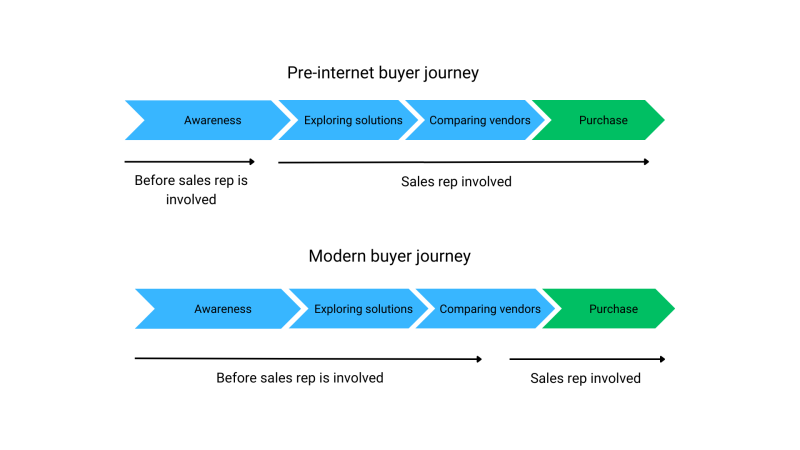
One significant shift in the sales landscape over the last few decades is that buyers have become much more knowledgeable about available products, primarily due to the rise of the internet and search engines. In the pre-internet era, salespeople were the primary source of information for potential buyers, who struggled to verify this information. Now, as buyers frequently conduct their own research—often utilizing free trials, checking company websites, and reading reviews on platforms like G2 and Capterra—the sales process has transformed to a buyer-driven model where 60-80% of the buyer's journey occurs before the prospect interacts with a sales representative. The graph below represents the shift described:
Inbound sales representatives typically respond to incoming inquiries from prospects who have already engaged in their initial due diligence. From my experience as a sales representative and manager in multiple companies, as well as a buyer of software solutions, I have identified the following five traits that distinguish successful inbound salespeople:
- Coachability and Motivation to Learn
This trait tops my list because coachability reflects a willingness to learn from internal best practices along with external sources—such as books, blogs, conferences, and industry experts. In an evolving landscape where trends shift rapidly, salespeople must remain open to feedback and continuous learning. You can assess coachability during the interview process by assigning role-based tasks and providing feedback, then later observing whether candidates incorporate this feedback in subsequent iterations.
- Time Management and Discipline
Inbound sales representatives juggle various activities, including calls, meetings, follow-up emails, preparation, and internal training. Efficient time management is essential, as prospects are often close to the end of their buyer journey. Failure to manage time effectively can result in prospects opting for vendors who can meet their needs more quickly or adapt better to their scheduling demands.
- Curiosity and Ability to Ask the Right Questions
Needs discovery is the most crucial part of the sales process, in my opinion.. Genuine curiosity about a client’s business is vital for gathering the necessary information to fully grasp their specific challenges, underlying motivations, and buying agenda. Active listening and effective questioning techniques—such as SPIN selling—are also fundamental to this process.
- Industry Knowledge
Among the traits listed, industry knowledge is perhaps the easiest to acquire. An in-depth understanding of your client's industry helps to establish rapport and earns you a right to ask insightful questions that generate honest responses. A practical tip for learning about your ideal client profile (ICP) is to shadow at least a few clients for a day or two. This firsthand experience will provide insights into their daily challenges, business process, and situations. Additionally, regularly recording and analyzing your discovery calls can enhance your teams expertise.
- Prior Success
At first glance, previous success appears to be a clear indicator of potential success for inbound sales representatives. However, caution is necessary, as businesses vary widely in terms of product, industry, team dynamics, market velocity, and more. While prior success often indicates strong work ethic and resilience, it is essential to assess how that success translates within the unique context of your organization. For example, a well-established sales rep from a mature organization may not be the best fit for a small startup with evolving products and processes. These 2 environments are just very different to compare.
As a disclaimer, this ranking is generalized based on my observations and experiences in sales. I strongly encourage organizations to define the traits that lead to success in their specific contexts, as this understanding will provide valuable insights when scaling your business.
If you struggle to define key drivers of success for your sales people/organization, feel free to reach out for a more specific advice.
Add comment
Comments